Computational Photography Is Quietly Rewriting the Rules of the Image
How HDR stacking, night mode, computational zoom, and semantic processing transformed what a photograph is, and what that means for photographers.
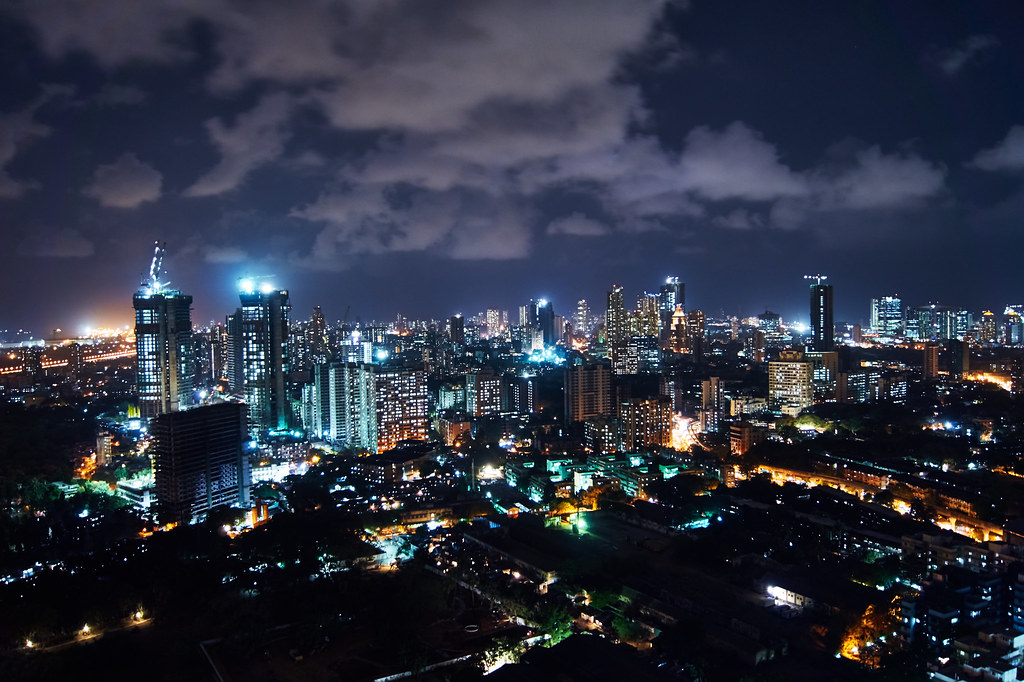
Point a modern phone at a dark restaurant, a backlit window, or a child running across a lawn, and it returns an image that the laws of optics say it has no business producing. The sensor is tiny. The lens is a sliver of plastic and glass smaller than a fingernail. By every traditional measure of photography, the picture should be a noisy, blurry, badly exposed mess. Instead it’s sharp, bright, and balanced, often more so than a scene that human eyes can actually perceive. The phone didn’t capture that image so much as compute it. And in doing so, it has quietly redefined what a photograph is.
This shift has happened so gradually, and so invisibly, that most people never noticed the rules changing under them. We still tap a shutter button and think we’re capturing a moment. What’s really happening is something far stranger and more interesting: the camera is gathering raw data and then making a cascade of decisions, billions of them, in the instant after the press, to construct a picture. The capture is no longer the end of the process. It’s the beginning.
What the camera is actually doing
For most of photography’s history, a photograph was a single act: light hit a surface, sensitized chemistry or silicon recorded it, and that record was the image. Computational photography breaks that one-to-one relationship. When you press the shutter on a current phone, the camera has often already been capturing a rolling buffer of frames before you even decided to shoot. It then selects, aligns, and merges many exposures into one, applying machine-learned models trained on enormous libraries of images to decide what the final result should look like. A handful of the techniques behind this:
- HDR stacking. Instead of one exposure that must compromise between bright sky and dark shadow, the camera captures several at different brightnesses and merges them, pulling detail from the highlights and the shadows simultaneously. This is why phones handle backlit scenes that would defeat a far more expensive traditional camera in a single shot.
- Night mode. In low light, the camera captures a burst of frames over a second or more, aligns them to cancel out hand shake, and averages them to suppress noise, reconstructing a clean, bright image from data that any single frame would render as murk.
- Computational zoom. Beyond the limits of the actual lenses, software fuses information across frames and lenses and uses learned models to reconstruct detail at focal lengths the optics can’t natively reach.
- Portrait blur. With no large sensor to produce shallow depth of field optically, the phone builds a depth map of the scene, separates subject from background, and synthesizes the soft, blurred backdrop that a fast lens would create.
- Semantic processing. The most consequential and least visible layer. The camera doesn’t just see pixels; it recognizes content. It knows that this region is a face, that one is sky, that one is foliage, and it processes each differently, brightening eyes, smoothing skin, deepening a blue sky, sharpening grass, according to what it understands the scene to contain.
That last category is where computational photography stops being mere image enhancement and starts becoming interpretation.
The benefits are not subtle
It would be a mistake to treat any of this as a gimmick. Computational photography is the single biggest reason that phone cameras went from a punchline to a genuine threat to dedicated cameras for everyday use. It has democratized good photography on a scale nothing before it approached. A person with no technical knowledge can now produce a properly exposed, sharp, pleasing image in conditions, harsh backlight, near-darkness, fast motion, that used to demand expertise, expensive equipment, and time.
It has also expanded what’s possible. Handheld photos of dim interiors and night skies, sharp shots of moving children, balanced exposures of high-contrast scenes: these were once the province of tripods, fast lenses, and careful post-processing. Now they’re the default, available to anyone, free, instantly. Whatever else one thinks about it, that is a remarkable expansion of who gets to make a good photograph.
The “is it real?” question
And yet a quiet unease has grown alongside the capability, captured in a question more and more people are asking: is the photo still real?
When the camera decides what the sky should look like, what skin should look like, what counts as detail, the line between recording reality and manufacturing it gets harder to find.
The unease is well founded, even if the framing is sometimes naive. Consider semantic processing again. If a camera recognizes a face and smooths the skin, brightens the eyes, and subtly reshapes the contours of light, is that still a photograph of the person, or a flattering interpretation of them? When computational zoom reconstructs detail that the lens never resolved, the model is, in a real sense, guessing, drawing on what similar scenes tend to look like to invent plausible texture. Usually the guess is right. Occasionally it isn’t, and the camera confidently renders detail that was never there.
It’s tempting to draw a clean line between “real” optical photography and “fake” computational imagery, but the line was never clean. Every photograph has always been an interpretation. Film stocks rendered color according to chemical choices; darkroom printers dodged and burned; every digital camera applies a processing pipeline. The question computational photography forces isn’t whether images are constructed, they always have been, but how much construction we’re comfortable with, how invisible it should be, and who gets to decide. The novelty is the degree and the autonomy: the camera is now making aesthetic and even semantic judgments on our behalf, automatically, often without our awareness.
What it means for photographers
For most people, the trade is overwhelmingly worth it, and the right response to the technology is gratitude, not suspicion. The point of a casual photo is to remember a moment, and a brighter, sharper, more pleasing rendering serves that purpose well. The “is it real” anxiety matters far more in contexts where authenticity is the whole point: journalism, evidence, scientific documentation, where the same processing that flatters a family snapshot can quietly distort a record that’s supposed to be trustworthy. As computational techniques grow more powerful, the institutions that depend on photographic truth will need clearer standards about what processing is acceptable and how it’s disclosed.
For serious photographers, the technology cuts two ways. It removes drudgery and expands the conditions in which one can work, and that’s liberating. But it also commoditizes a certain kind of competence. When the camera reliably nails exposure, focus, and noise reduction on its own, technical mastery, once a meaningful differentiator, matters less. What remains, and arguably matters more than ever, is everything the computation can’t supply: vision, timing, taste, the choice of what to point the camera at and when to press the button. The machine can construct a clean image of a dull moment. It cannot recognize a moment worth capturing. That judgment is still entirely ours.
The future of the image
The trajectory is clear: computation will keep absorbing more of the photographic act, and the boundary between capturing and generating an image will continue to blur, especially as the same machine-learning techniques that reconstruct detail in your night shots increasingly overlap with tools that can generate imagery from nothing at all. That convergence is the genuinely unsettled frontier, and it deserves more scrutiny than the everyday magic of a good night-mode photo.
But it’s worth holding two ideas at once. Computational photography has given more people the power to make beautiful images than any development in the medium’s history, and that is a real and democratic good. It has also, quietly, changed what we mean when we say a photograph shows us something true. Both things are happening at the same time, in the same device, every time we tap the shutter. The rules of the image have already been rewritten. The work ahead is deciding, deliberately rather than by default, which of the old rules we still want to keep.