10 Composition Techniques Behind the World's Most Striking Landscapes
Ten compositional tools landscape photographers rely on, from foreground interest and leading lines to scale, light, and the patience to wait.
A great landscape photograph rarely happens by accident. Stand at a famous overlook on a beautiful evening and you’ll see a dozen people pointing cameras at the same view, yet only a few will come away with an image that holds your attention. The difference is almost never the gear. It’s composition, the deliberate arrangement of what’s in the frame and what’s left out, that separates a postcard from a photograph you can’t stop looking at.
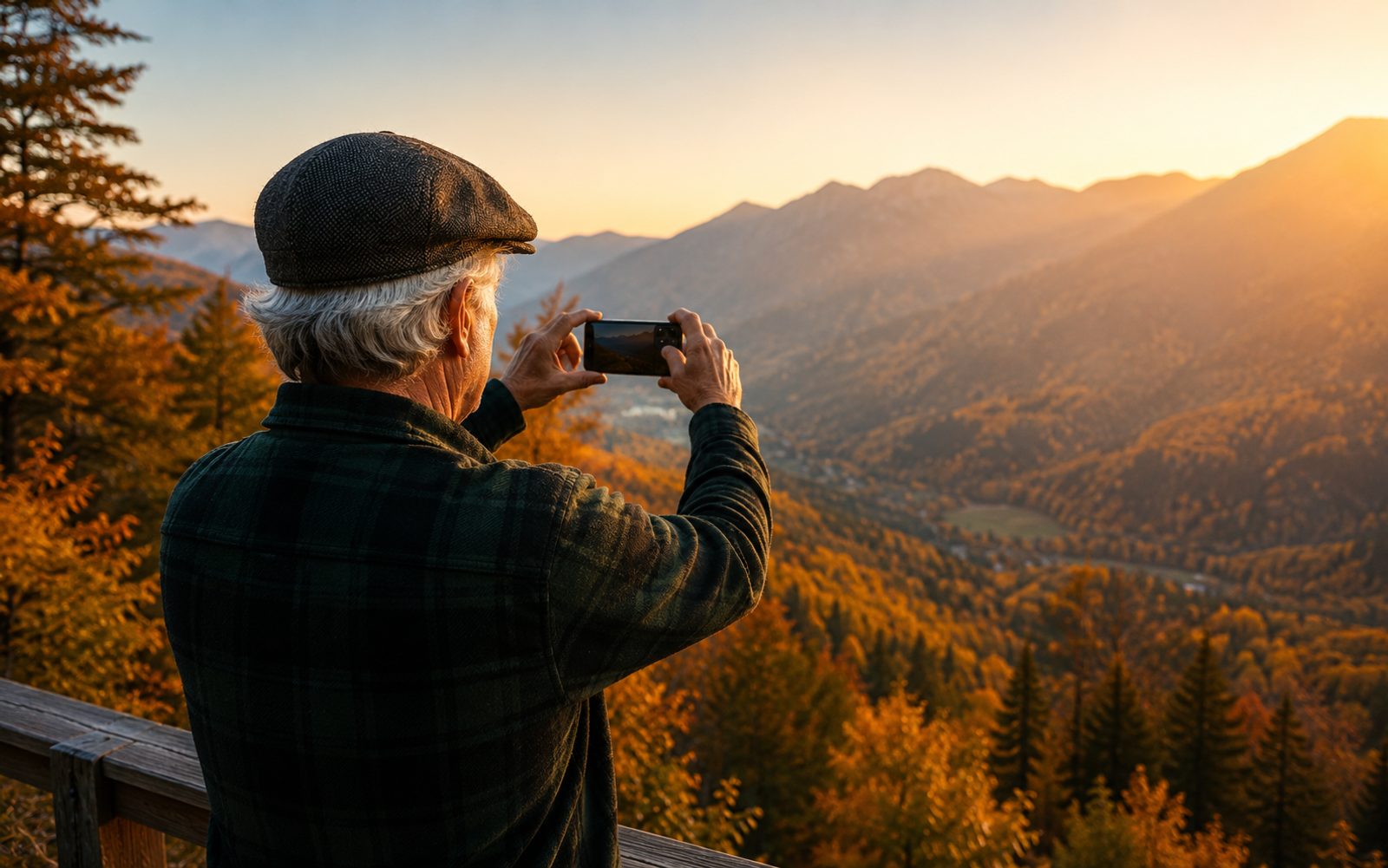
Composition isn’t a set of rigid rules so much as a toolkit. The photographers who consistently make striking landscapes have internalized a handful of techniques and learned when to reach for each. Here are ten of the most powerful, and how to put them to work, whether you’re carrying a tripod and a full-frame camera or just the phone in your pocket.
1. Anchor the frame with strong foreground interest
The single most common weakness in landscape photos is an empty foreground, a vast scene with nothing to grab the eye up close. A rock, a patch of wildflowers, a tide pool, a fallen log: a strong foreground element gives the viewer a place to enter the image and a sense of being there rather than merely looking at it. Get low and close to your foreground subject to give it presence. On a phone, the wide native lens and deep depth of field make foreground-heavy compositions especially easy to pull off.
2. Use leading lines to pull the eye in
Roads, rivers, fences, shorelines, and ridgelines are gifts. A line that travels from the front of the frame toward your main subject guides the viewer’s gaze exactly where you want it to go. Diagonal and S-curved lines feel more dynamic than straight horizontals. Position yourself so a natural line begins near a corner of the frame and sweeps inward toward the focal point.
3. Build depth by layering
A landscape is three-dimensional; a photograph is flat. The trick to restoring that sense of depth is layering, composing so the scene reads in distinct planes: foreground, middle ground, and background. Morning or evening mist is the layering photographer’s best friend, separating ridgelines into receding bands of progressively lighter tone. When the eye can step from one layer to the next, the image gains a feeling of vastness no single plane can convey.
4. Place the horizon with intent
The lazy habit is to drop the horizon dead center. Occasionally that works, especially for symmetrical reflections, but more often you should commit. A low horizon emphasizes a dramatic sky; a high horizon emphasizes the land and any foreground interest. Decide what the photograph is about, the sky or the ground, and place the horizon to favor it. Above all, keep it level. A tilted horizon is the fastest way to undermine an otherwise strong frame.
5. Give the scene a sense of scale
Grandeur only reads as grandeur when there’s something to measure it against. A lone hiker on a ridge, a cabin beneath a mountain, a boat on a wide lake, a small, recognizable element tells the viewer just how enormous the surrounding landscape really is. Without that reference, a thousand-foot cliff can look like a backyard boulder. Scale is what turns “nice view” into “look how small we are.”
A landscape doesn’t feel vast until the photograph gives the eye something small to compare it to.
6. Let light and weather do the heavy lifting
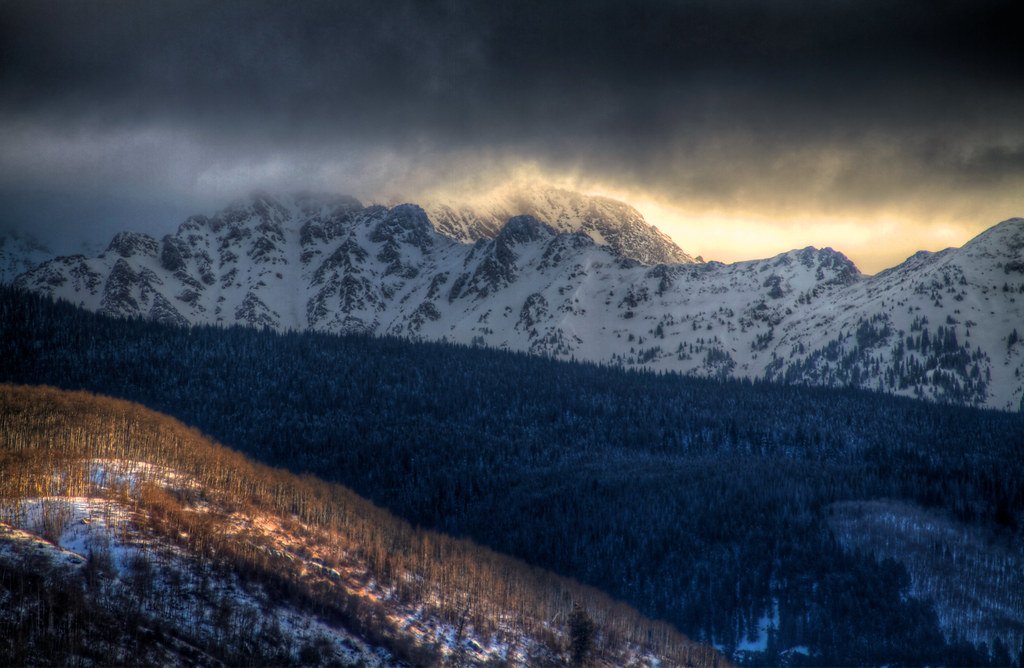
The same location can be forgettable at noon and unforgettable at dawn. Soft, low, directional light, the kind you get near sunrise and sunset, reveals texture and shape that flat midday sun erases. But don’t stop at golden light. Storm clouds, fog, breaking weather, and the dramatic skies that follow rain often produce far more compelling images than a cloudless blue day. The most striking landscapes frequently come from photographers willing to be out in conditions everyone else avoids.
7. Choose your focal length deliberately
Focal length is a compositional decision, not just a framing convenience.
- Wide angles exaggerate the relationship between near and far, making foregrounds loom large and backgrounds recede. They’re ideal for that immersive, you-are-here feeling.
- Telephoto compresses distance, stacking layers together and isolating a distant peak or a slice of a ridgeline. It’s how you make faraway mountains feel close and monumental.
Phones increasingly offer both ends of this range, and the telephoto compression trick works beautifully on a phone’s longer lens, an underused move for mobile landscapes.
8. Frame within the frame
Look for natural elements that can border your composition: an overhanging branch, a cave mouth, an archway, a gap between trees. Framing the main scene this way adds depth, directs attention inward, and gives the eye a foreground anchor all at once. It also signals craft, the sense that the photographer chose this vantage rather than simply standing where everyone else stood.
9. Simplify ruthlessly
Beginners tend to add; experienced photographers subtract. A cluttered landscape, too many competing elements, a busy sky, distracting edges, leaves the viewer with nowhere to rest. Before you press the shutter, scan the entire frame and ask what each element contributes. If something doesn’t earn its place, recompose to exclude it. Often the strongest landscape is the most restrained one: a single subject, clean negative space, and nothing fighting for attention. Watch your edges in particular, where stray branches and bright distractions love to creep in.
10. Be patient
The final technique isn’t a framing trick at all. It’s the willingness to wait. The light you want may be twenty minutes away. The cloud may need to drift off the peak. The crowd may need to clear, or a single figure may need to walk into exactly the right spot. The photographers behind the world’s most striking landscapes return to locations again and again, sometimes for years, until everything aligns. Patience is what separates the image you imagined from the one you settled for.
Putting it together
You won’t use all ten of these in a single frame, and you shouldn’t try. The skill is in recognizing which tools a given scene is asking for: a sweeping valley wants layering and scale; a winding river wants a leading line and a thoughtful horizon; a misty forest wants simplification and patient light. Start by mastering one technique at a time until it becomes instinct, then let them combine on their own.
And don’t wait for an epic destination to practice. The same principles that elevate a mountain range will sharpen a photo of your local park at dawn. The view matters far less than the eye you bring to it, and the eye, unlike the view, is something you can train.